Dental Bridges vs Implants: Which Is Better?
Dental Bridges vs Implants: Which Is Better?
Missing teeth can significantly impact one’s quality of life, affecting everything from eating and speaking to self-confidence. Fortunately, modern dentistry offers highly effective solutions to restore your smile and oral function. When faced with the decision to replace a missing tooth or multiple teeth, two primary options often come to the forefront: dental bridges and dental implants. Both procedures aim to fill gaps, but they differ fundamentally in their approach, longevity, impact on oral health, and overall patient experience. Understanding these differences is crucial for making an informed decision that aligns with your specific needs, oral health status, and long-term goals. This comprehensive guide will delve into the intricacies of each option, helping you navigate the choice between these two restorative powerhouses.

Understanding Dental Bridges: A Traditional Approach
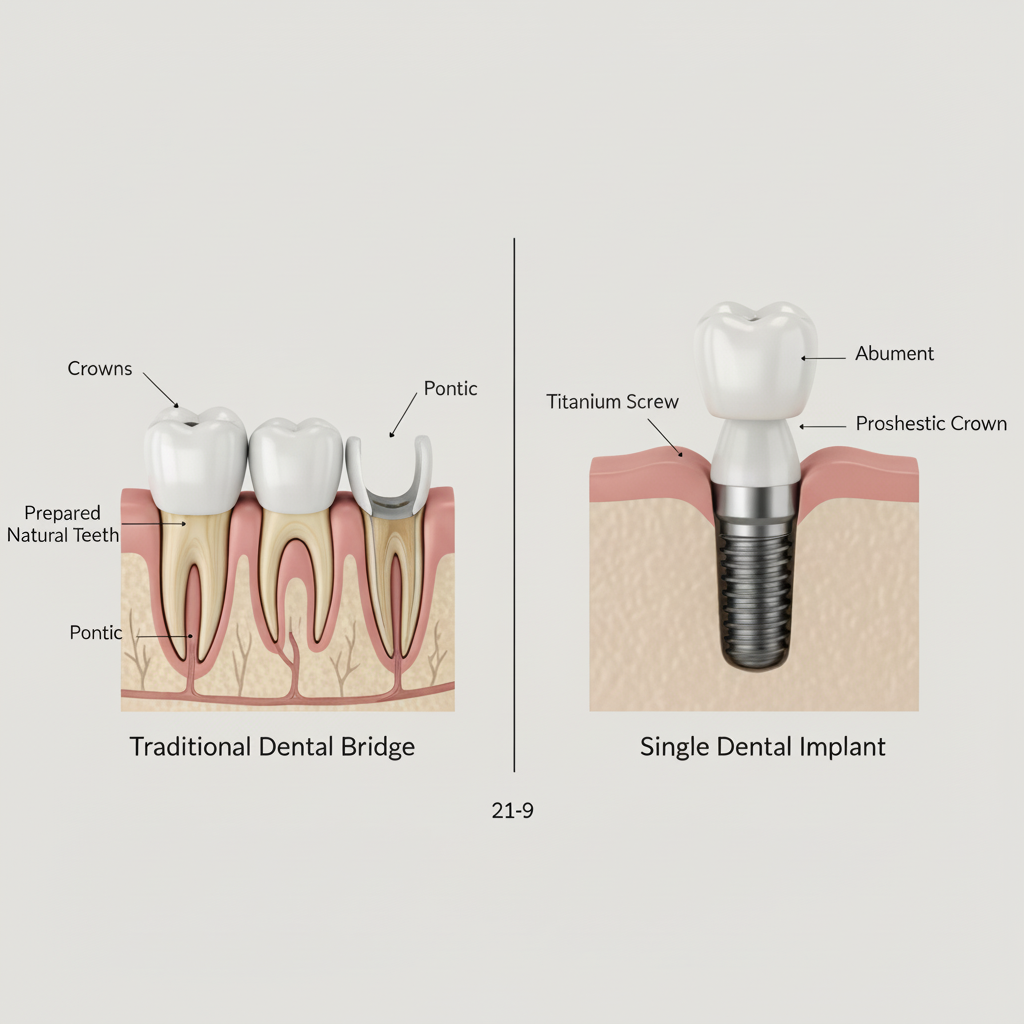
A dental bridge is a fixed dental prosthesis used to “bridge” the gap created by one or more missing teeth. It consists of artificial teeth, known as pontics, which are held in place by dental crowns cemented onto the natural teeth adjacent to the gap, or by dental implants. Historically, traditional bridges have been a standard and reliable method for tooth replacement, offering a relatively quick and straightforward solution.
What Are Dental Bridges and How Do They Work?
The fundamental principle behind a dental bridge is to create a seamless restoration that spans the space of the missing tooth, supported by the teeth on either side. These supporting teeth, called abutment teeth, are prepared by having a portion of their enamel removed to allow for the placement of crowns over them. These crowns, along with the pontic(s), are then fabricated as a single unit in a dental laboratory. Once cemented into place, the bridge becomes a permanent fixture in your mouth, designed to look and function like natural teeth. There are several types of dental bridges:
* **Traditional Bridges:** The most common type, involving crowns on adjacent teeth to support the pontic.
* **Cantilever Bridges:** Used when there is only one adjacent tooth available to support the bridge. Less common and generally used in areas of low stress.
* **Maryland Bonded Bridges (Resin-Bonded Bridges):** These use a metal or porcelain framework with “wings” that are bonded to the back of the adjacent teeth, avoiding extensive preparation.
* **Implant-Supported Bridges:** Instead of relying on natural teeth, these bridges are anchored by dental implants.
The Dental Bridge Procedure
The process of getting a traditional dental bridge typically involves two appointments. During the first visit, the dentist prepares the abutment teeth by recontouring them to make space for the crowns. Impressions of your teeth are then taken and sent to a dental laboratory, where your custom bridge is fabricated. A temporary bridge is usually placed to protect the prepared teeth and maintain your smile while the permanent bridge is being made. In the second appointment, the temporary bridge is removed, and the permanent bridge is carefully fitted, adjusted, and then permanently cemented onto the prepared abutment teeth.
Pros and Cons of Dental Bridges
Dental bridges offer several advantages that make them a popular choice for tooth replacement. They are generally less invasive than implants, requiring no surgical procedure into the jawbone. The treatment timeline is also considerably shorter, often completed within a few weeks. From a cost perspective, the initial outlay for a traditional bridge is typically lower than that of a single dental implant. Bridges effectively restore chewing function and aesthetics, preventing adjacent teeth from shifting into the gap.
However, dental bridges also come with specific disadvantages. The primary drawback is the necessity to prepare (grind down) healthy adjacent teeth to serve as abutments. This process is irreversible and can potentially compromise the long-term health of these teeth, making them more susceptible to decay or nerve problems in the future. Bridges do not stimulate the jawbone beneath the missing tooth, which can lead to bone loss over time and alter facial structure. Their lifespan is also generally shorter than implants, often ranging from 5 to 15 years, depending on care and oral hygiene. Cleaning under the pontic can also be challenging, requiring special tools to maintain hygiene and prevent issues.
Understanding Dental Implants: The Modern Standard
Dental implants have revolutionized tooth replacement, offering a solution that closely mimics the natural tooth structure, from root to crown. They are widely regarded as the most durable and natural-feeling option for replacing missing teeth, whether it’s a single tooth, multiple teeth, or even an entire arch.
What Are Dental Implants?
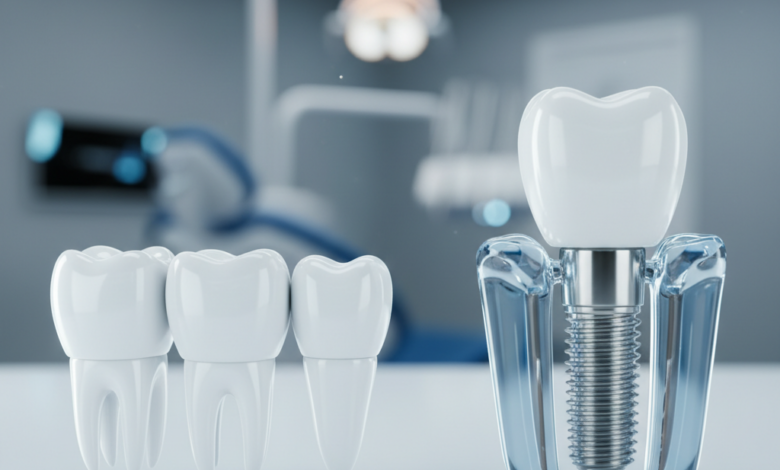
A dental implant consists of a small, screw-shaped post, typically made of biocompatible titanium, which is surgically placed into the jawbone beneath the gum line. This post acts as an artificial tooth root. Over time, the implant fuses with the surrounding bone in a process called osseointegration, providing a strong and stable foundation for a prosthetic tooth. Once integrated, an abutment is attached to the implant, extending through the gum, onto which a custom-made crown, bridge, or denture can be securely fitted. Unlike bridges, implants do not rely on adjacent natural teeth for support.
The Dental Implant Procedure
The journey to receiving a dental implant typically involves several stages and requires a longer overall treatment period than a bridge. It begins with a comprehensive evaluation, including X-rays and 3D imaging, to assess bone quality and density. The first surgical phase involves the precise placement of the titanium implant post into the jawbone. Following this, a crucial healing period of several months ensues, during which osseointegration occurs – the process where the implant fuses with the bone. Once osseointegration is complete, a second, minor surgical procedure may be performed to uncover the implant and attach a small connector post called an abutment. Finally, an impression is taken, and a custom-made crown, designed to match your natural teeth, is fabricated and attached to the abutment. For certain cases, immediate load implants may allow for a temporary crown placement shortly after surgery.
Pros and Cons of Dental Implants
Dental implants boast a remarkable array of advantages. They are the only tooth replacement option that helps preserve natural bone, preventing the jawbone deterioration that occurs with missing teeth. This is because the implant stimulates the bone, much like a natural tooth root. Implants do not require the alteration of adjacent healthy teeth, leaving them intact and untouched. With proper care, dental implants can last a lifetime, making them a highly cost-effective solution in the long run. They offer superior stability, comfort, and a natural appearance, allowing patients to eat, speak, and smile with confidence. The success rate for dental implants is also very high, often exceeding 95%.
However, dental implants do have some considerations. They involve a surgical procedure, which carries inherent risks, albeit minimal, such as infection or nerve damage. The total treatment time can span several months due to the osseointegration period. The initial cost of a dental implant is generally higher than that of a traditional bridge, which can be a barrier for some individuals. Not everyone is a suitable candidate for implants; adequate bone density is essential, and certain medical conditions or lifestyle habits (like smoking) can affect eligibility and success rates.
Dental Bridges vs Implants: A Detailed Comparison
Choosing between a dental bridge and a dental implant involves weighing various factors, from the invasive nature of the procedure to long-term costs and oral health impacts. Here’s a comparative overview to highlight their key differences:
| Feature | Dental Bridge | Dental Implant |
|---|---|---|
| Support Structure | Supported by adjacent natural teeth (which must be prepared/ground down). | Supported by a titanium post surgically integrated into the jawbone. |
| Impact on Adjacent Teeth | Requires grinding down healthy adjacent teeth to serve as abutments for crowns. | Leaves adjacent teeth untouched and preserves their natural structure. |
| Bone Health & Preservation | Does not stimulate the jawbone, potentially leading to bone loss in the missing tooth area. | Stimulates the jawbone, preventing bone loss and preserving facial structure. |
| Procedure Invasiveness | Less invasive; involves tooth preparation and cementing of the bridge. No surgery into the bone. | More invasive; requires surgical placement of the implant post into the jawbone. |
| Treatment Time | Typically 2-3 weeks, over 2 appointments. | Several months (3-9 months), due to osseointegration healing period. |
| Longevity | Typically 5-15 years, with proper care. | 25 years to a lifetime, with proper care and oral hygiene. Dental implants boast a high long-term success rate. |
| Cost (Initial) | Generally lower initial cost. | Generally higher initial cost. |
| Maintenance & Hygiene | Requires special flossing tools (e.g., floss threaders) to clean under the pontic. | Maintained like natural teeth with regular brushing and flossing. |
| Feel & Aesthetics | Can feel natural, but may not be as stable as an implant. | Feels and looks most like a natural tooth, offering superior stability. |
Key Factors in Your Decision
The “better” option between a dental bridge and a dental implant is not universal; it hinges entirely on individual circumstances. Several factors will influence the most suitable choice for you.
Patient Suitability and Oral Health
Your overall oral health is a critical determinant. For dental implants, sufficient jawbone density and good general health are paramount, as surgery is involved. Patients with uncontrolled chronic diseases like diabetes or certain autoimmune conditions, or those who smoke heavily, may have a higher risk of implant failure. If you have insufficient bone, bone grafting procedures might be necessary, adding to the treatment time and cost. For bridges, the health of the adjacent teeth is key; they must be strong enough to support the bridge. If these teeth are already weakened or extensively restored, they may not be ideal abutments.
Cost and Treatment Timeline Considerations
Budget is often a significant factor. While the initial cost of a traditional bridge is generally lower, it’s important to consider the long-term value. Bridges may need to be replaced every 5-15 years, incurring recurring costs. Implants, despite a higher upfront investment, often last a lifetime, potentially making them more economical over several decades. The timeline for treatment also plays a role. If you need a quicker solution for aesthetic or functional reasons, a bridge might be appealing. If you can commit to a longer process for a potentially more durable and health-preserving outcome, implants might be preferred.
Long-Term Benefits and Maintenance
Consider the long-term implications for your oral health. Implants offer bone preservation, preventing the sunken facial appearance that can occur with tooth loss. They also simplify oral hygiene, as you can brush and floss around them just like natural teeth. Bridges, on the other hand, require meticulous cleaning under the pontic to prevent plaque buildup and decay in the abutment teeth. The decision should reflect your priorities: whether you value a quick, less invasive fix, or a long-lasting solution that supports overall oral health and preserves natural tooth structure.
The Importance of Professional Consultation
Ultimately, the most critical step in this decision-making process is a thorough consultation with a qualified dental professional. Your dentist will conduct a comprehensive examination, including X-rays and potentially 3D scans, to assess your oral health, jawbone structure, and the condition of your remaining teeth. They will discuss your medical history, lifestyle, and aesthetic goals. Based on this personalized evaluation, your dentist can provide tailored recommendations, explain the pros and cons specific to your situation, and help you determine whether a dental bridge or a dental implant is the ideal solution for restoring your smile and oral function. It is a decision that impacts not just your teeth, but your overall well-being for years to come.”