What Happens During a Dental Implant Procedure?
What Happens During a Dental Implant Procedure?
Dental implants represent a revolutionary advancement in restorative dentistry, offering a durable and aesthetically pleasing solution for missing teeth. Far more than a cosmetic fix, a dental implant procedure replaces the tooth root with a screw-like post, providing a strong foundation for a permanent artificial tooth. This comprehensive treatment not only restores the natural appearance of your smile but also preserves jawbone health and enhances overall oral function. Understanding each stage of this sophisticated process is crucial for patients considering this life-changing treatment, ensuring informed decisions and realistic expectations.
Understanding the Dental Implant Procedure
The journey to a restored smile with dental implants begins with meticulous planning and assessment. This initial phase is critical for determining a patient’s suitability and designing a treatment plan tailored to their unique needs.
Initial Consultation and Assessment
The first step involves a thorough evaluation by a qualified dental professional. During this consultation, the dentist will conduct a comprehensive oral examination, review your medical history, and discuss your specific goals and concerns. Imaging plays a pivotal role here, with X-rays and 3D cone-beam computed tomography (CBCT) scans being essential tools. These advanced imaging techniques provide detailed insights into the jawbone structure, nerve locations, and sinus cavities, allowing the dentist to assess bone density and volume, which are critical factors for successful implant placement. Patients with insufficient bone density may require bone grafting procedures before implant surgery can proceed, adding an additional stage to the overall treatment timeline. General health considerations, such as controlled diabetes or certain medications, are also evaluated to minimize risks and optimize healing.
The Planning Phase
Once the initial assessment is complete, a precise treatment plan is meticulously crafted. Leveraging the data from the 3D scans, dentists can utilize advanced digital planning software to virtually map out the ideal position and angle for each implant. This allows for the creation of surgical guides, often fabricated with CAD/CAM technology, which are custom templates used during the surgery to ensure highly accurate and safe implant placement. This level of precision significantly enhances the predictability of the outcome, reduces surgical time, and minimizes potential complications. The planning phase also involves selecting the appropriate type and size of implants, considering factors like bone quality, aesthetic requirements, and the functional demands on the new tooth.
The Surgical Stages of Dental Implants
The core of the dental implant procedure involves one or more surgical stages, carefully executed to integrate the implant into the jawbone.
Stage 1: Implant Placement Surgery
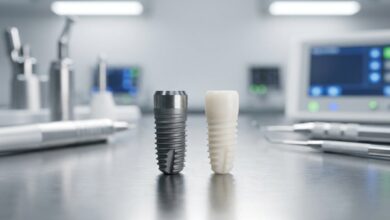
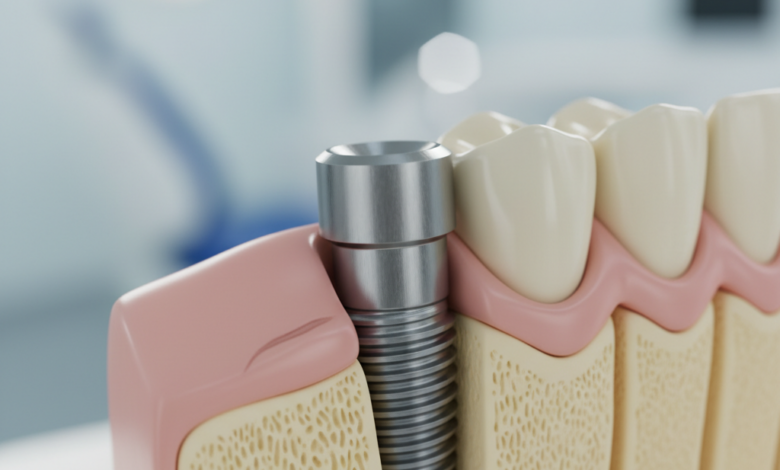
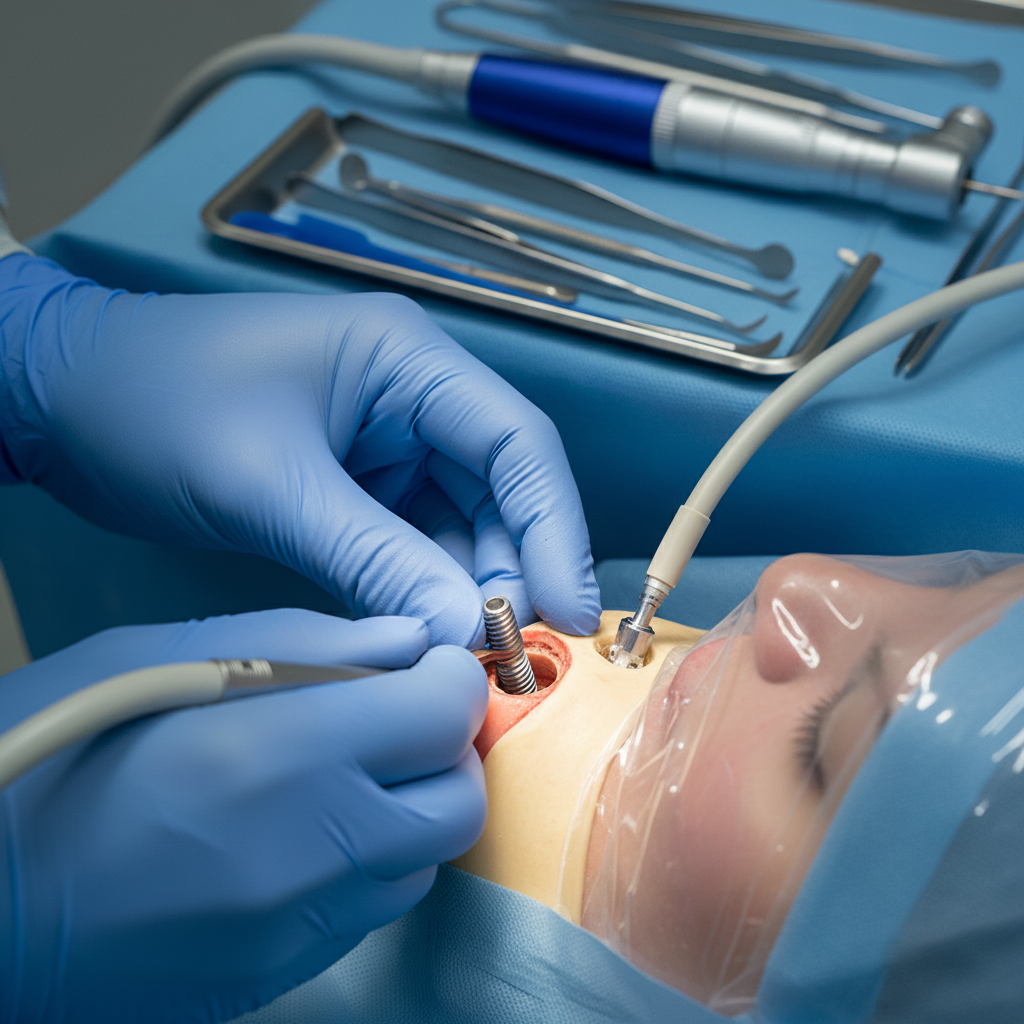
The implant placement surgery is typically performed under local anesthesia, though sedation options are available for patient comfort. The dental surgeon begins by making a small incision in the gum tissue to expose the underlying jawbone. A specialized drill system is then used to create a pilot hole, which is gradually widened to the precise diameter and depth required for the implant. The titanium implant post is then carefully screwed into place within the jawbone. Titanium is chosen for its exceptional biocompatibility, meaning it is well-tolerated by the body and promotes a process called osseointegration. Osseointegration is the critical biological process where the bone cells grow directly onto and around the implant surface, creating a strong, stable, and permanent anchor for the future prosthetic tooth. After the implant is securely placed, the gum tissue is either closed over the implant (a two-stage procedure) or a healing cap is attached to the implant, allowing it to protrude through the gum line (a one-stage procedure). The healing period for osseointegration typically lasts anywhere from 3 to 6 months, during which time the implant fuses with the bone.
Stage 2: Abutment Placement (if two-stage procedure)
If a two-stage procedure was initially performed, a second, minor surgical procedure is required after successful osseointegration. This involves a small incision to uncover the top of the dental implant. A small connector post, known as an abutment, is then attached to the implant. The abutment serves as the connection piece between the implant and the final prosthetic tooth (crown, bridge, or denture). Once the abutment is in place, the gum tissue is allowed to heal around it for approximately one to two weeks, forming a natural collar that supports the final restoration. For single-stage procedures, the abutment may be placed immediately or a healing cap is exchanged for the abutment after osseointegration.
Below is a simplified table outlining the typical stages of a dental implant procedure:
| Stage | Description | Approximate Timeline |
|---|---|---|
| Initial Consultation & Planning | Comprehensive examination, imaging (X-rays, CBCT), treatment plan development, surgical guide fabrication. | 1-2 weeks |
| Bone Grafting (if needed) | Procedure to augment jawbone density; may require separate healing. | 4-9 months (additional) |
| Implant Placement Surgery | Surgical insertion of the titanium implant post into the jawbone. | 1-2 hours |
| Osseointegration Healing Period | Bone fuses with the implant; implant integrates into the jawbone. | 3-6 months |
| Abutment Placement (Two-Stage) | Minor surgery to attach the abutment to the integrated implant. | 1 week healing |
| Prosthetic Fabrication & Placement | Impressions taken, custom crown/bridge/denture made and attached to the abutment. | 2-4 weeks |
Restorative Phase: Receiving Your New Tooth
Once the implant has fully integrated with the jawbone and the abutment is securely in place, the final phase of the dental implant procedure begins: the creation and attachment of your new, custom-made tooth.
Impression Taking and Crown Fabrication
With the abutment exposed, impressions of your mouth are taken. These can be traditional physical impressions or digital scans, which are then sent to a dental laboratory. Highly skilled technicians use these impressions to custom-design and fabricate your permanent restoration, whether it’s a single crown, a bridge, or a full denture. The new tooth is meticulously crafted to match the shape, size, and color of your natural teeth, ensuring it blends seamlessly with your smile. Materials such as porcelain or zirconia are commonly used for their durability and aesthetic qualities. This customization process ensures a natural appearance and proper bite alignment.
Attachment of the Abutment and Crown
After the custom crown (or bridge/denture) is fabricated, you will return to the dental office for its final placement. The dentist will carefully attach the permanent restoration to the abutment, either by screwing it into place or bonding it with a strong dental cement. The fit and bite are meticulously checked and adjusted to ensure maximum comfort and functionality. Once attached, your new tooth is fully functional and virtually indistinguishable from your natural teeth. You can now confidently chew, speak, and smile without the limitations previously experienced with missing teeth.
Post-Procedure Care and Long-Term Success
Proper care after your dental implant procedure is crucial for promoting healing and ensuring the longevity of your new smile.
Immediate Aftercare and Recovery
Immediately following implant surgery, it’s normal to experience some swelling, bruising, minor bleeding, and discomfort. Your dentist will provide specific post-operative instructions, which typically include:
- **Pain Management:** Over-the-counter pain relievers or prescribed medication can manage discomfort.
- **Diet:** Stick to soft foods for the first few days to a week to avoid disturbing the surgical site.
- **Oral Hygiene:** Gently rinse with a prescribed antimicrobial mouthwash or salt water, avoiding aggressive brushing around the surgical area initially.
- **Activity:** Avoid strenuous activities for a few days to promote healing.
- **Smoking:** Refrain from smoking, as it significantly impairs healing and can lead to implant failure.
Following these instructions diligently is vital for a smooth recovery and successful osseointegration.
Long-Term Maintenance and Longevity
Dental implants, while incredibly durable, require the same meticulous oral hygiene as natural teeth. This includes daily brushing, flossing, and regular dental check-ups and professional cleanings. Neglecting oral hygiene can lead to peri-implantitis, an inflammatory condition similar to gum disease, which can compromise the implant’s stability. With proper care, dental implants can last for many decades, often a lifetime. This makes them a highly cost-effective and permanent solution for tooth loss. Maintaining excellent oral health not only protects your implants but also contributes to your overall well-being. For more details on various techniques, consider exploring dental implant techniques.
Benefits of Choosing Dental Implants
The numerous advantages of dental implants extend far beyond aesthetics, impacting oral health and quality of life.
Natural Look and Feel
One of the most significant benefits of dental implants is their ability to mimic natural teeth almost perfectly. Because they are anchored directly into the jawbone, they feel stable and secure, just like real teeth. The custom-made crowns are designed to blend seamlessly with your existing dentition, ensuring that your smile looks completely natural. This natural integration means no slipping, clicking, or discomfort often associated with removable dentures, offering unparalleled confidence in social and professional settings. You can speak, laugh, and eat without any self-consciousness.
Improved Oral Health and Function
Unlike bridges, dental implants do not require altering adjacent healthy teeth. This preserves the natural tooth structure and promotes long-term oral health. Furthermore, implants stimulate the jawbone, preventing the bone loss that typically occurs when a tooth is lost. This bone preservation helps maintain facial structure and prevents the sunken appearance that can result from prolonged tooth loss. With implants, chewing efficiency is significantly restored, allowing you to enjoy a wider variety of foods and maintain a balanced diet, which is crucial for overall health. This functionality is a key aspect often highlighted in medical literature on dental prosthetics. For further information on the science behind dental implants, refer to authoritative sources such as Wikipedia’s comprehensive article on Dental Implants.
Durability and Longevity
Constructed from robust, biocompatible materials like titanium, dental implants are designed to be a long-term solution. With diligent oral hygiene and regular dental check-ups, they can last for many decades, often for the remainder of a patient’s life. This exceptional longevity makes them a superior investment compared to other tooth replacement options that may require more frequent replacement or repair. Their resistance to decay, combined with their stable integration, offers a restorative solution that stands the test of time, providing patients with enduring comfort and functionality.

The dental implant procedure is a sophisticated, multi-stage treatment that offers a permanent, stable, and aesthetically pleasing solution for missing teeth. From the initial comprehensive assessment and meticulous planning to the surgical placement and final restoration, each step is designed to achieve optimal results. Patients who choose dental implants can look forward to a restored smile, improved oral health, and enhanced quality of life, benefiting from a durable solution that functions and feels remarkably like natural teeth.