What Happens If You Ignore a Cavity?
What Happens If You Ignore a Cavity? That small twinge of sensitivity you feel when eating something sweet, or the tiny dark spot you notice on a molar, can be easy to dismiss. Life is busy, and a trip to the dentist for something that seems minor can fall to the bottom of the priority list. However, a cavity, known clinically as dental caries, is not a static issue that will resolve itself. It is a progressive disease caused by bacteria that metabolize sugars in your mouth, producing acids that erode tooth structure. Ignoring a cavity sets in motion a predictable and increasingly severe chain of events that can impact not just your oral health, but your overall well-being. What begins as a simple, painless fix can escalate into a complex, painful, and costly dental emergency. Understanding the stages of this progression is crucial to appreciating why immediate professional attention is not just recommended, but essential.
The Initial Stages of Tooth Decay
The journey of a cavity begins long before you feel any pain. The process is gradual, and in its earliest phase, it is even reversible with professional intervention and improved oral hygiene. Unfortunately, because these initial stages are often asymptomatic, they are frequently overlooked by patients.
Stage 1: Demineralization
Before a physical hole forms, the tooth enamel begins to lose vital minerals. This is called demineralization. The acid produced by plaque bacteria starts to leach calcium and phosphate from the enamel, the tooth’s hard, protective outer layer. At this point, you may notice faint, chalky white spots on the surface of your teeth. There is no pain or sensitivity associated with this stage. This is a critical window of opportunity. With professional treatments like topical fluoride applications, along with diligent brushing and flossing at home, the enamel can remineralize and essentially heal itself, stopping the cavity in its tracks.
Stage 2: Enamel Decay
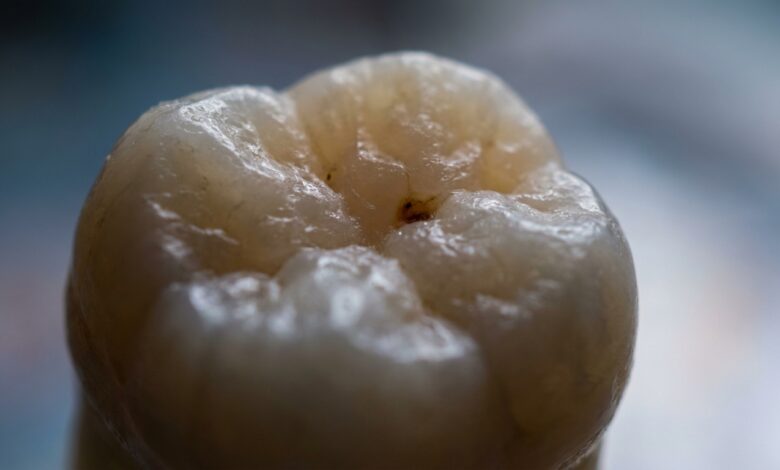
If the demineralization process is not halted, the acid will continue to weaken the enamel until it breaks down, creating a physical hole or cavity. This is the point where the decay becomes irreversible through home care alone. The cavity is still contained within the enamel layer, so it might not cause significant pain. Some individuals may start to experience mild sensitivity to very hot, cold, or sweet foods and drinks as the breach in the enamel exposes the underlying structures. At this stage, the standard and most effective treatment is a simple dental filling. A dentist will remove the decayed portion of the tooth and fill the space with a durable material, restoring the tooth’s structure and function and preventing further progression.
The Consequences When You Ignore a Cavity
Once the decay has penetrated the enamel, the rate of progression accelerates significantly. The layers beneath the enamel are much softer and more vulnerable, leading to more severe symptoms and requiring more invasive treatments.
Stage 3: Dentin Decay
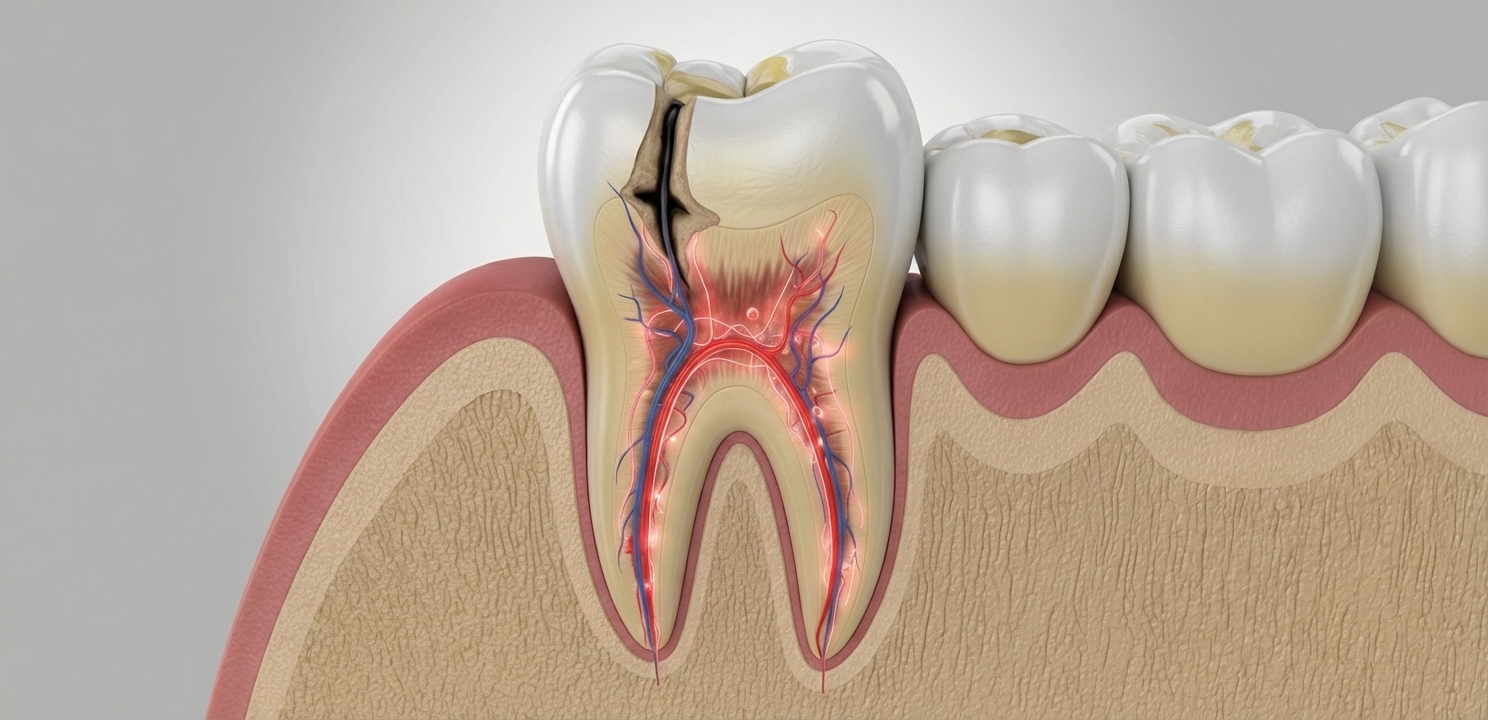
Beneath the enamel lies the dentin, a softer, more porous layer that makes up the bulk of the tooth. Dentin is filled with microscopic tubules that lead directly to the tooth’s nerve center, the pulp. When a cavity reaches the dentin, it spreads more rapidly. The sensitivity you experience will become sharper and more frequent. The tooth will ache or throb, especially in response to temperature changes. The color of the cavity may darken to a brown or black hue. A dental filling may still be possible if the decay is caught early in this stage, but it will be a larger filling than what would have been required for enamel decay.
Stage 4: Pulp Involvement
This is a critical turning point where a minor dental issue becomes a major one. The pulp is the living core of the tooth, containing nerves, blood vessels, and connective tissue. When the bacterial infection from the cavity reaches the pulp, it causes inflammation and infection, a condition called pulpitis. The pressure inside the tooth builds, leading to intense, persistent, and often throbbing pain. This is the classic toothache that can keep you up at night. The pain may be spontaneous, not just a reaction to a stimulus. At this juncture, a simple filling is no longer sufficient to save the tooth. The infected pulp must be removed through a procedure known as a root canal. If you experience these symptoms, you should be aware of the signs you might need a root canal treatment to understand the urgency of the situation.
Advanced Complications from an Untreated Cavity
Ignoring the signs of pulp involvement allows the infection to fester and spread beyond the confines of the tooth itself. The consequences now become serious, posing a threat not just to the tooth but to the surrounding bone and your systemic health.
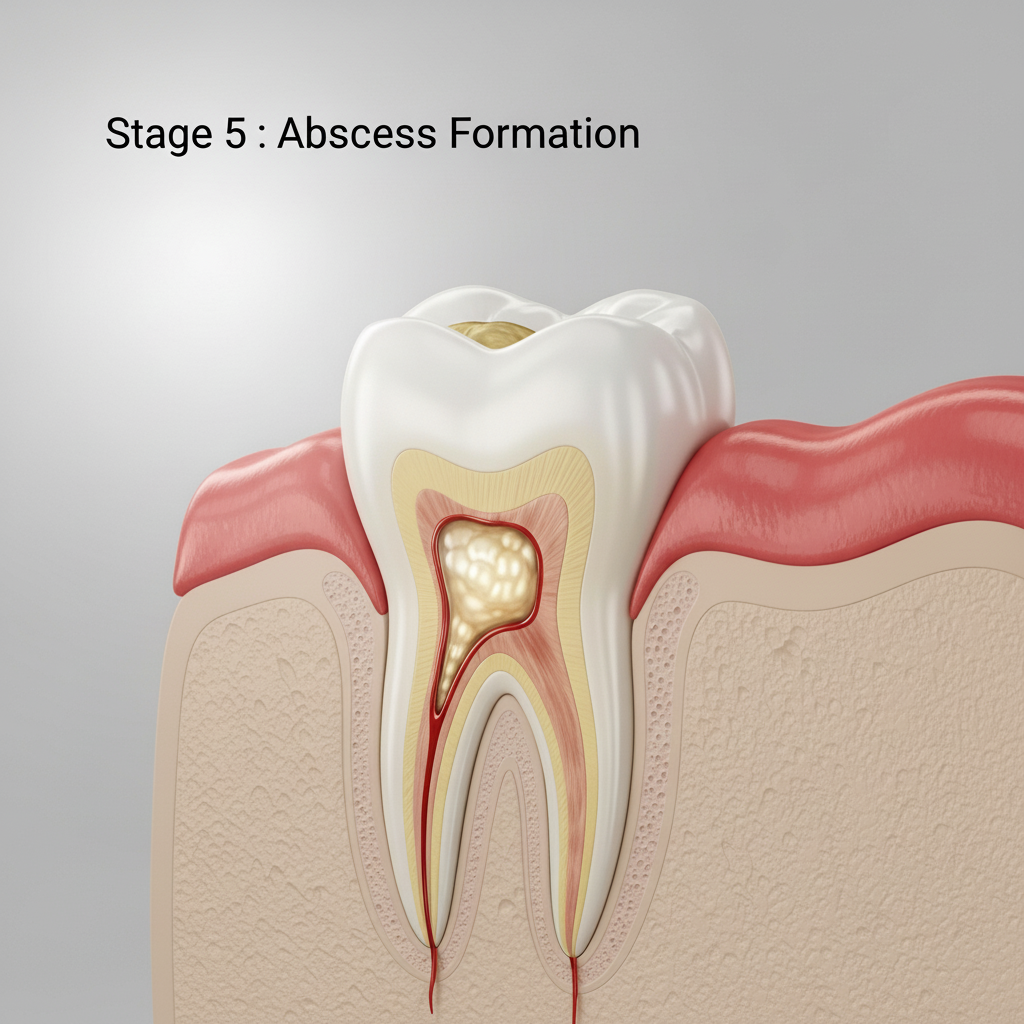
Stage 5: Abscess Formation
When the infected pulp dies, the bacteria can travel out through the tip of the tooth’s root and into the jawbone. This leads to the formation of a periapical abscess, which is a pocket of pus. This condition is a severe infection and constitutes a dental emergency. Symptoms include severe, continuous, and radiating pain; extreme sensitivity to touch or pressure on the tooth; swelling in the gums, cheek, or face; a foul taste in the mouth; and sometimes fever. According to a review on dental caries, this progression highlights how bacterial infections can cause significant local and systemic problems if not managed. An abscess will not go away on its own and requires immediate dental treatment, which may involve a root canal to drain the infection or, in severe cases, tooth extraction.
Stage 6: Tooth Loss
If an abscessed tooth remains untreated, the infection will continue to destroy the surrounding bone tissue that anchors the tooth in place. The tooth will become progressively looser. Eventually, the structural support will be so compromised that the tooth either falls out on its own or must be extracted by a dentist to eliminate the source of the infection. Losing a tooth has its own set of consequences, including difficulty chewing, shifting of adjacent teeth, and bone loss in the jaw.
| Stage of Decay | Primary Symptoms | Typical Dental Treatment |
|---|---|---|
| Enamel Decay | None or mild sensitivity to sweets. A visible dark or white spot. | Dental Filling |
| Dentin Decay | Moderate to sharp pain with hot/cold/sweet stimuli. Visible cavity. | Larger Dental Filling or Inlay/Onlay |
| Pulp Involvement | Severe, spontaneous, throbbing pain. Lingering pain after stimuli. | Root Canal Therapy and a Dental Crown |
| Abscess Formation | Extreme pain, swelling of the face/gums, fever, foul taste. | Emergency Root Canal or Tooth Extraction |
| Advanced Infection/Tooth Loss | Severe pain, loose tooth, significant bone loss, potential systemic illness. | Tooth Extraction and management of infection. |
Systemic Health Risks: Beyond the Tooth
Perhaps the most compelling reason not to ignore a cavity is that a severe dental infection can have life-threatening consequences. The bacteria from a dental abscess can enter the bloodstream and travel to other parts of the body, a condition known as bacteremia. This can lead to serious systemic health issues. For instance, the bacteria can seed infections in the heart (infective endocarditis), brain (brain abscess), or lungs. In rare but critical cases, an infection from a lower molar can spread to the tissues of the floor of the mouth and neck, causing a condition called Ludwig’s angina. This can cause massive swelling that obstructs the airway, creating a medical emergency. These scenarios underscore that oral health is intrinsically linked to overall health.
Why Professional Treatment is Non-Negotiable
The clear progression from a minor issue to a major health crisis demonstrates why professional dental care is indispensable. Cavities do not heal, and there are no home remedies that can reverse decay once it has breached the enamel. The principle of “early detection saves teeth” is paramount. A small, inexpensive filling performed in a single visit can completely halt the disease process. This simple procedure prevents the need for more complex, time-consuming, and expensive treatments like root canals, crowns, or extractions followed by implants or bridges. Modern dentistry utilizes effective anesthetics and advanced techniques to ensure these procedures are comfortable and pain-free. Regular dental check-ups and cleanings are the most effective strategy for identifying and addressing cavities in their earliest, most manageable stages, protecting both your smile and your health.