Invisalign vs Braces: Which One Is Better?
Invisalign vs Braces: Which One Is Better?
The quest for a perfectly aligned smile is a journey many people undertake to boost their confidence and improve their oral health. For decades, traditional metal braces were the primary, and often only, option for correcting misaligned teeth, overbites, underbites, and other orthodontic issues. However, the turn of the century brought a revolutionary alternative: Invisalign clear aligners. This has left many potential patients wondering which treatment path is superior. The truth is, the “better” option is not a one-size-fits-all answer; it depends entirely on the individual’s clinical needs, lifestyle, budget, and personal preferences. Understanding the fundamental differences, benefits, and drawbacks of each system is the first step toward making an informed decision in consultation with a dental professional.
What Are Traditional Braces?
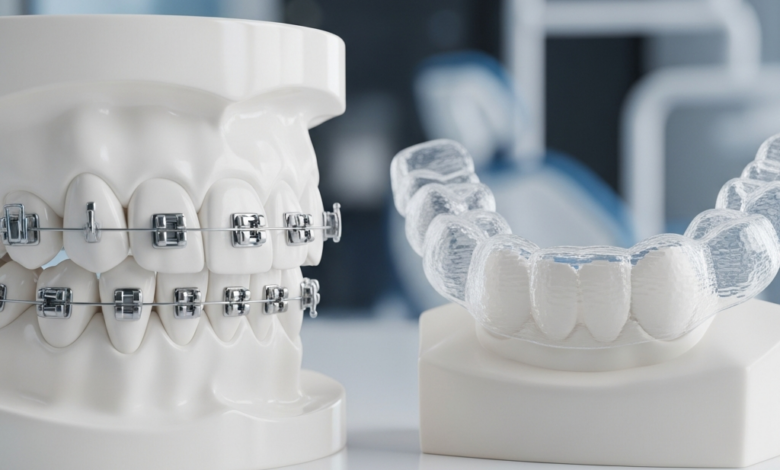
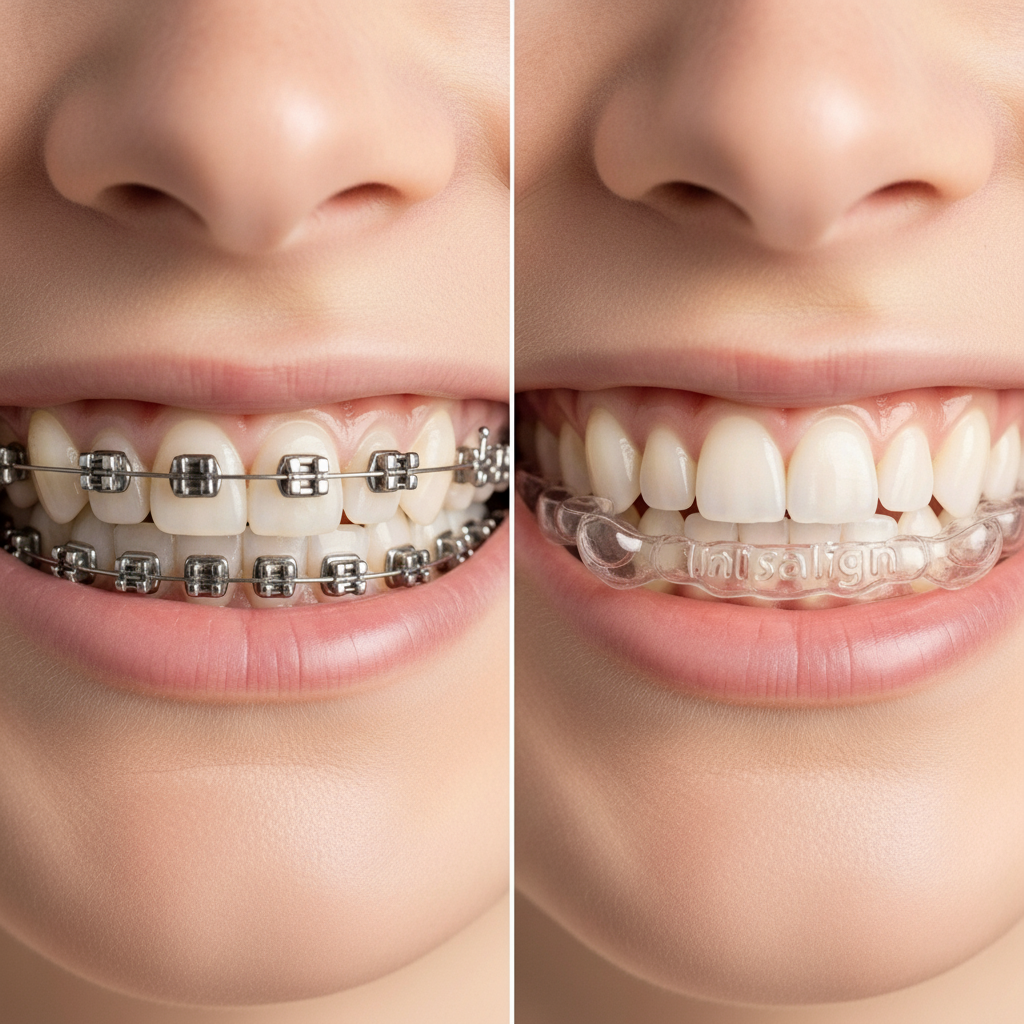
Traditional braces are the most recognizable form of orthodontic treatment. They consist of a system of brackets, archwires, and ligatures (or elastic bands) that work together to apply continuous, gentle pressure to the teeth, gradually moving them into their desired position over time. The brackets are typically made of high-grade stainless steel or a more aesthetic ceramic material and are bonded directly to the front surface of each tooth.
How Do Braces Work?
The mechanics behind traditional braces are a marvel of biomechanical engineering. The small brackets act as handles, allowing the orthodontist to control tooth movement precisely. An archwire, a thin metal wire, is threaded through these brackets, creating a track that guides the teeth. The wire is engineered to want to return to its original, ideal U-shape. As it tries to straighten itself, it exerts a slow, steady force on the teeth via the brackets. This pressure stimulates a cellular response in the jawbone. On the side of the tooth where pressure is applied, bone tissue breaks down (a process called resorption). On the opposite side, new bone tissue is formed (deposition). This carefully controlled process allows the teeth to move through the bone to a new, healthier alignment. Regular appointments, typically every 4-8 weeks, are necessary for the orthodontist to make adjustments, tighten the archwire, and ensure the treatment is progressing as planned.
The Pros and Cons of Metal Braces
Braces have remained a gold standard in orthodontics for a reason: they are incredibly effective and reliable. Their primary advantage is their power to correct a wide range of complex dental issues, including severe crowding, significant bite problems, and major tooth rotations that may be beyond the scope of clear aligners. Because they are fixed to the teeth, compliance is not an issue; the patient cannot forget to wear them, ensuring continuous treatment. However, they are not without their drawbacks. The most cited disadvantage is their aesthetics; metal brackets and wires are highly visible. They can also cause some initial discomfort, including soreness and irritation to the cheeks and lips. Oral hygiene is more challenging, as food particles can easily get trapped, requiring meticulous brushing and flossing. Finally, patients with braces must adhere to certain dietary restrictions, avoiding hard, sticky, or chewy foods that could damage the appliance.
Understanding Invisalign Clear Aligners
Invisalign offers a modern, discreet alternative to traditional braces. This system utilizes a series of custom-made, clear plastic trays, known as aligners, to straighten teeth. These aligners are made from a patented thermoplastic material called SmartTrack, which is designed to be both comfortable and effective. The patient wears each set of aligners for approximately one to two weeks before progressing to the next set in the series, with each new tray moving the teeth slightly closer to the final position.
The Invisalign Process Explained
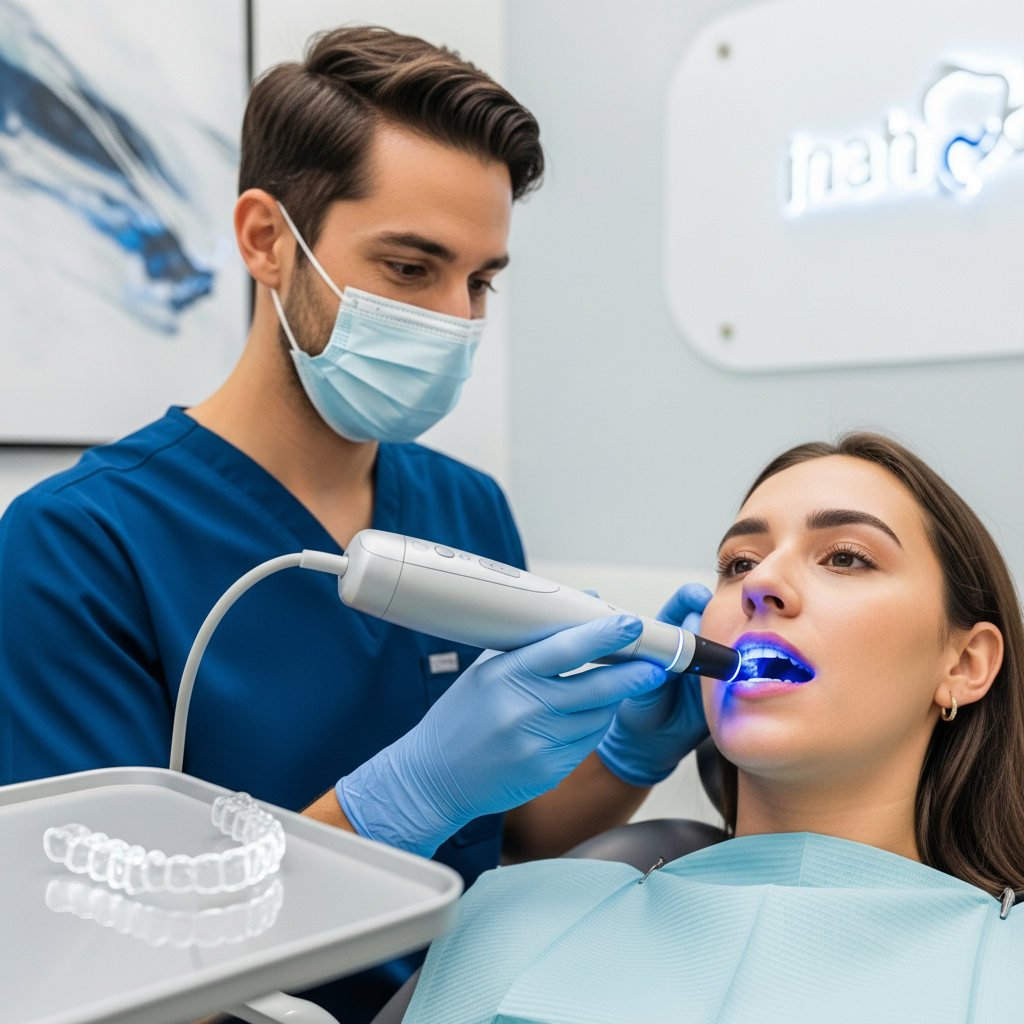
The journey with Invisalign begins with a detailed digital consultation. Instead of messy physical impressions, a dentist uses a 3D intraoral scanner, like the iTero scanner, to create a precise digital model of the patient’s teeth. This model is then used with specialized software to map out the entire treatment plan, from the initial position of the teeth to the final desired outcome. This allows patients to see a virtual representation of their new smile before treatment even begins. Based on this plan, a series of custom aligners is fabricated. The key to Invisalign’s success is patient compliance. The aligners must be worn for 20-22 hours per day, only being removed for eating, drinking anything other than water, and oral hygiene. Small, tooth-colored composite “attachments” may also be bonded to certain teeth to give the aligners extra grip and facilitate more complex movements.
Advantages and Disadvantages of Invisalign
The most significant advantage of Invisalign is its near-invisibility. The clear aligners are discreet, allowing patients to undergo orthodontic treatment without feeling self-conscious. They are also removable, which means there are no dietary restrictions, and maintaining oral hygiene is as simple as brushing and flossing normally. Many users report that the aligners are more comfortable than braces, with no sharp metal wires or brackets to irritate the mouth. However, this removability is also its biggest potential weakness. The treatment is only effective if the patient is disciplined enough to wear the aligners for the recommended amount of time. Forgetting to wear them or frequently losing them can significantly delay treatment progress. While technology has advanced, Invisalign may still not be the ideal solution for extremely complex orthodontic cases involving severe bite correction or extractions, where the fixed force of traditional braces provides superior control.
A Detailed Comparison: Invisalign vs Braces
Choosing between these two excellent treatments requires a direct comparison of the factors that matter most to patients. The ideal choice balances clinical necessity with lifestyle compatibility.
| Feature | Traditional Braces | Invisalign |
|---|---|---|
| Aesthetics | Highly visible (metal or ceramic brackets). Lingual braces are an invisible but more expensive option. | Nearly invisible. The clear plastic aligners are very discreet. |
| Comfort | Can cause soreness and irritation to cheeks and lips, especially after adjustments. | Generally more comfortable with smooth edges. Some pressure is felt when changing to a new tray. |
| Maintenance & Hygiene | Challenging. Requires special tools like floss threaders to clean around wires and brackets. | Easy. Aligners are removed for brushing and flossing teeth as normal. Aligners must also be cleaned. |
| Dietary Restrictions | Yes. Avoid hard, sticky, and chewy foods to prevent damage to the appliance. | No. Aligners are removed for all meals and snacks, so you can eat whatever you like. |
| Treatment Time | Typically 18-36 months, depending on the complexity of the case. | Average treatment time is 12-18 months, but can be shorter for minor cases. |
| Effectiveness | Highly effective for all cases, including the most severe and complex malocclusions. | Very effective for mild to moderate cases. Efficacy for complex cases is improving but may be limited. |
| Compliance | Patient compliance is not an issue as the appliance is fixed to the teeth. | Heavily dependent on patient discipline. Must be worn 20-22 hours per day. |
| Cost | Cost varies widely, but can sometimes be slightly less expensive than Invisalign. | Often comparable to or slightly more expensive than traditional braces. |
Key Factors to Consider When Making Your Choice
Beyond the technical specifications, your personal situation plays the most crucial role in determining the right orthodontic path for you. A thorough evaluation with a dental professional is essential to assess your clinical needs and discuss how each option fits into your life.
The Complexity of Your Orthodontic Needs
The first and most important consideration is the nature of your dental misalignment. For individuals with severe crowding, large gaps, or complex bite issues (like a deep overbite or crossbite), traditional braces often provide the most predictable and efficient results. The constant, targeted force from a fixed appliance gives the orthodontist a level of control that is sometimes necessary for these challenging movements. A comprehensive analysis by a dental expert is crucial, as some studies suggest that while clear aligners are effective for many conditions, fixed appliances may still be superior for achieving certain types of tooth movement, such as significant root torque or extrusion. The peer-reviewed journal, The Angle Orthodontist, has published research comparing the efficacy of these systems, highlighting the strengths of each in different clinical scenarios.
Lifestyle and Personal Commitment
Your daily routine and level of personal discipline are major factors. If you are a teenager or young adult whose parents are concerned about compliance, the “set it and forget it” nature of braces might be preferable. Athletes in contact sports may find the smooth profile of Invisalign aligners safer than metal brackets. Musicians who play wind instruments may also prefer the removability of aligners. Conversely, if you are a busy professional who values discretion and doesn’t want dietary restrictions, and you are confident in your ability to wear the aligners as prescribed, Invisalign is an outstanding choice. Consider your habits: if you are a frequent snacker or coffee drinker throughout the day, the need to constantly remove and clean your aligners could become a significant inconvenience.
Neither Invisalign nor braces are universally “better.” The best orthodontic treatment is the one that safely and effectively achieves the desired clinical outcome while fitting the patient’s lifestyle and budget. Braces are a powerful, reliable tool, particularly for complex cases, guaranteeing results without relying on patient compliance. Invisalign offers a revolutionary blend of aesthetics, comfort, and convenience, empowering disciplined patients to achieve their goals discreetly. The final decision should always be made after a comprehensive consultation with an experienced dentist or orthodontist. They can properly diagnose your specific needs, discuss the pros and cons of each system as they apply to you, and help guide you on the path toward how to get a perfect smile with cosmetic dentistry. Ultimately, both roads lead to the same beautiful destination: a healthier, more confident, and perfectly aligned smile.